What Does a Metronome Measure?
Updated Nov 13, 2026 · By  Jonah Mercer · Editorial policy
As an Amazon Associate I earn from qualifying purchases. Buying through the Amazon links on this page costs you nothing extra. Full disclosure
A metronome measures tempo: it counts beats per minute, so you can hear and see the speed of a piece of music. The question “what does a metronome measure” has a short answer: time. It marks each beat with a click, a flash or a bell, and the dial number is the count of beats in a minute.
Tempo is beats per minute
Tempo is the speed of a piece, counted in beats per minute, or BPM. The number you set is the only thing the metronome measures: it does not count pitch, volume or how long you play. Metronome dials run from 40 to 208 BPM, with 40 at the slow end and 208 at the fast end. Set the number to the speed of the piece, then play a note per click.
Beats, bars and the bell
A metronome also marks the beat pattern, so you know where the bar starts. The Sondery ProBeat has 10 beat patterns from 0 to 9, and the Ueteto, HOSEYIN and TERENCE metronomes use 0, 2, 3, 4 and 6. Set the beat number to the count of beats in a bar, and the bell rings on the first beat of each bar. A setting of 0 gives a plain click on every beat with no bell.
Digital and mechanical metronomes
A digital metronome runs on a rechargeable battery, sets tempo with buttons and a dial, and adds extras such as a tap function, a timer and vocal counting. The Sondery ProBeat charges from any 5V USB power source and sets tempo by a rotary dial. A mechanical metronome winds up by hand, needs no battery, and clicks with a swinging pendulum and a bell. The Ueteto, HOSEYIN and TERENCE metronomes are mechanical, and a full wind on the Ueteto lasts at least 18 minutes.
How to use the reading
Set the tempo to the speed of the piece, set the beat number to the count of beats in a bar, and start the metronome before you play the first note. Play a note per click at first, then play the passage as written once you stay on the clicks. If you drift off the click, slow the tempo down until the clicks line up again, then raise it back in small steps.
What you need

Sondery Digital Metronome Rechargeable Vocal Counting
A rechargeable digital metronome with a 40 to 208 BPM range, 10 beat patterns, a tap function and vocal counting.
- Top tempo: 208 BPM
- Rechargeable
- Type: Digital

Ueteto Mechanical Metronome Black/Loud Sound Piano Drum
A wind-up mechanical metronome with a 40 to 208 BPM range, beat selection of 0, 2, 3, 4 and 6, and no battery needed.
- Top tempo: 208 BPM
- Type: Mechanical

HOSEYIN Mechanical Metronome
A mechanical metronome with a 40 to 208 BPM range, beat selection of 0, 2, 3, 4 and 6, and a 1-year warranty.
- Top tempo: 208 BPM
- Type: Mechanical
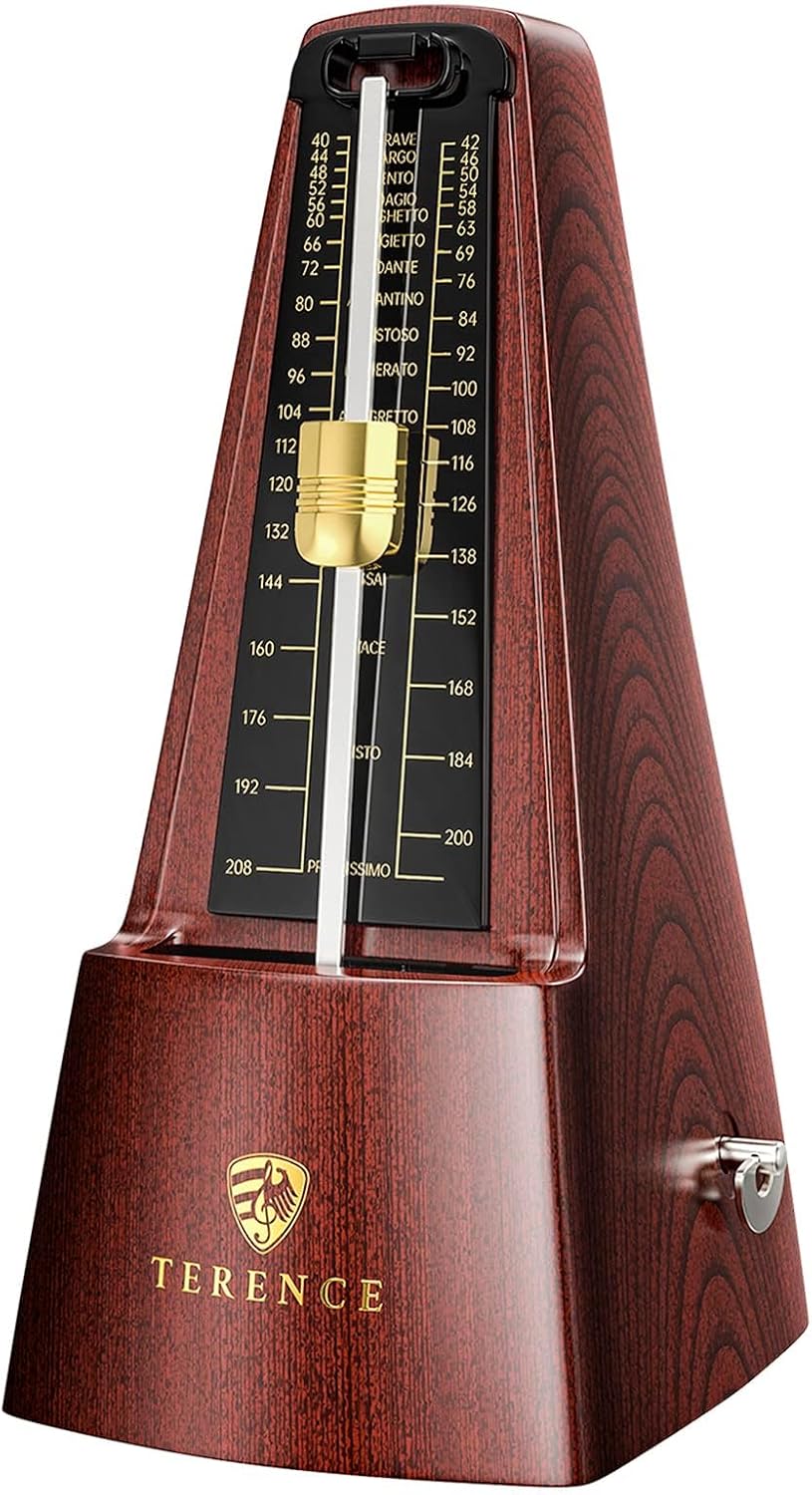
TERENCE Mechanical Metronomes for Piano Guitar Violin Bass
A mechanical metronome with a metal movement, a 40 to 208 BPM range and beat selection of 0, 2, 3, 4 and 6.
- Top tempo: 208 BPM
- Type: Mechanical
These come from our ranked list Best Metronome, which compares them spec by spec.
Frequently asked questions
Does a metronome measure pitch or volume?
No. A metronome measures tempo only, in beats per minute. Pitch and volume are separate: a tuner measures pitch, and the metronome only marks the speed of the beat.
What BPM should I set for practice?
Set the tempo to the speed of the piece you are playing, then slow it down until you stay on the clicks. Raise it back in small steps as the passage gets steady, and if your metronome has a tap function, use it to find a tempo by ear.
Do mechanical metronomes need batteries?
No. A mechanical metronome winds up by hand and needs no battery. The Ueteto, HOSEYIN and TERENCE metronomes are mechanical, while the Sondery ProBeat runs on a rechargeable battery.
Ranked metronomes lists
More how-to guides
Product details come from each Amazon listing and can change. Check the listing before you buy.