How Do Metronomes Work?
Updated Nov 11, 2026 · By  Jonah Mercer · Editorial policy
As an Amazon Associate I earn from qualifying purchases. Buying through the Amazon links on this page costs you nothing extra. Full disclosure
Metronomes work by marking a steady beat at a set tempo, so each click lands on a beat you can follow. A mechanical metronome keeps time with a wind-up spring and a swinging arm, while a digital metronome keeps time with a circuit and a speaker. Set the tempo in beats per minute and start the metronome.
What a metronome marks
A metronome marks time in beats per minute, called BPM. The tempo range on the metronomes here runs from 40 to 208 BPM, so a low number means a slow beat and a high number means a fast beat. The beat pattern sets how the beats group: the mechanical metronomes here offer 0, 2, 3, 4 and 6, and the digital metronome offers 10 beat patterns from 0 to 9. A bell can mark the first beat of each group, so you hear where each group starts.
How a mechanical metronome works
A mechanical metronome runs on a wind-up spring, so it needs no battery. Wind the spring, release the brake or stopper, and set the beat and the tempo. The spring drives the arm back and forth, and the metronome clicks on each swing. The bell rings on the first beat of the pattern you pick. A single full wind on the Ueteto lasts at least 18 minutes, and the length depends on the tempo.
How a digital metronome works
A digital metronome runs on a rechargeable battery and sets the tempo with buttons, a knob or a rotary dial. The Sondery sets tempo with a rotary dial from 40 to 208 BPM, and its tap function sets the tempo from two taps. It gives a choice of 3 types of digital sounds, a vocal counting option and an LED light that shows the tempo. A timer sets the length at 15, 30, 45 or 60 minutes, and the metronome charges from any 5V USB power source.
Set the tempo and start
Pick a tempo in beats per minute first, then pick a beat pattern. On a mechanical metronome, set the beat and the tempo before you start; on the digital metronome, use the dial, the buttons or the tap function. Start the metronome and listen for the click on each beat, with the bell on the first beat of the pattern. If the tempo is wrong, stop the metronome, change the tempo, and start again.
What you need

Sondery Digital Metronome Rechargeable Vocal Counting
A digital metronome with a rotary dial from 40 to 208 BPM, 10 beat patterns, a vocal counting option, a tap function and a timer.
- Top tempo: 208 BPM
- Rechargeable
- Type: Digital

Ueteto Mechanical Metronome Black/Loud Sound Piano Drum
A mechanical metronome with a wind-up spring, a click and a bell, beat choices of 0, 2, 3, 4 and 6, and no battery.
- Top tempo: 208 BPM
- Type: Mechanical

HOSEYIN Mechanical Metronome
A mechanical metronome with a 40 to 208 BPM range, beat choices of 0, 2, 3, 4 and 6, bell sounds and a 1-year manufacturer warranty.
- Top tempo: 208 BPM
- Type: Mechanical
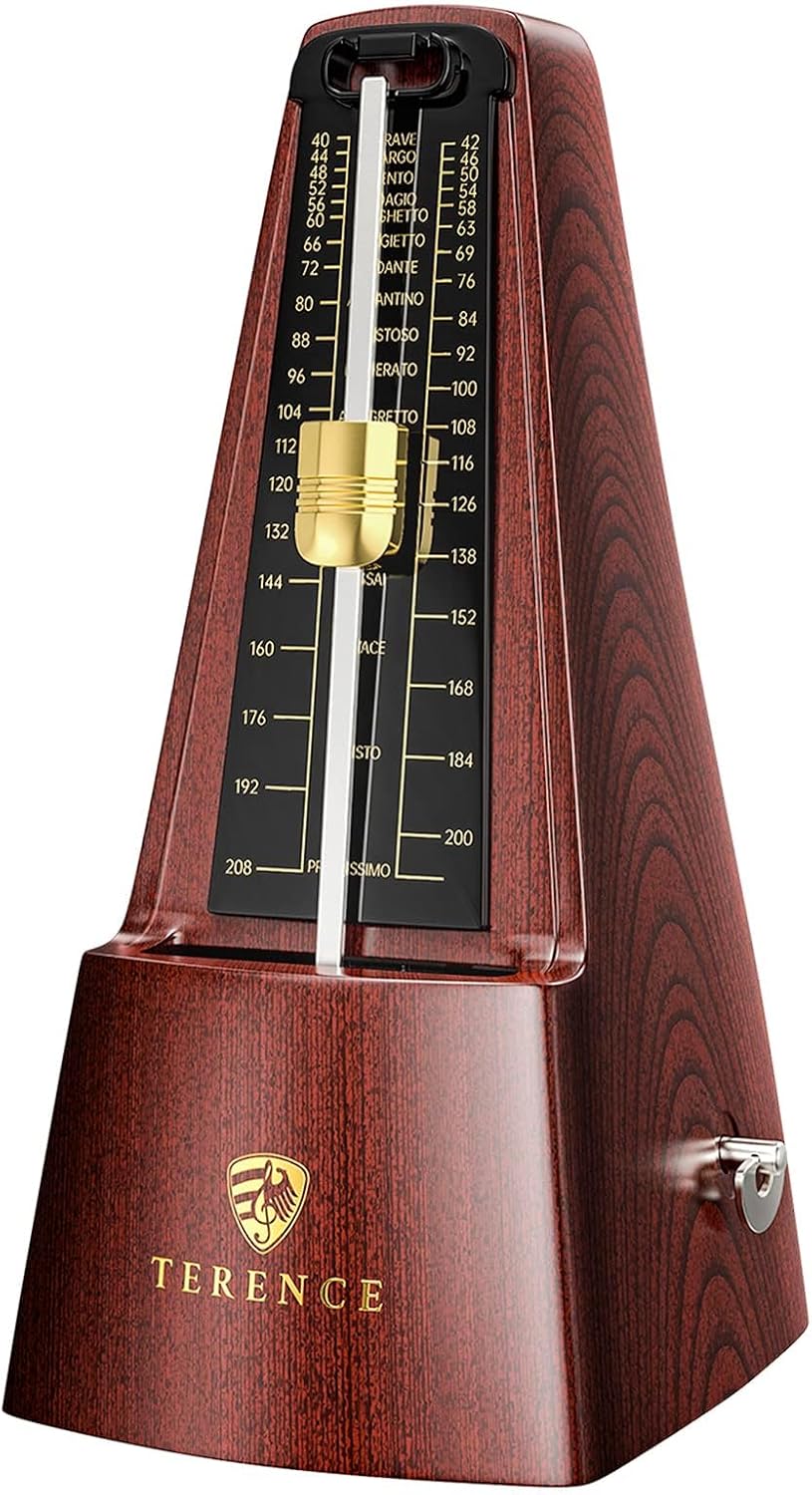
TERENCE Mechanical Metronomes for Piano Guitar Violin Bass
A mechanical metronome with a metal movement, a 40 to 208 BPM range and beat choices of 0, 2, 3, 4 and 6.
- Top tempo: 208 BPM
- Type: Mechanical
These come from our ranked list Best Metronome, which compares them spec by spec.
Frequently asked questions
Do metronomes need batteries to work?
A mechanical metronome needs no battery, since it runs on a wind-up spring. The digital metronome here runs on a rechargeable battery and charges from any 5V USB power source.
What tempo range do these metronomes cover?
All four metronomes here cover 40 to 208 BPM. Set the dial or the buttons to the tempo you want, then pick a beat pattern from the choices the metronome gives.
Can a metronome mark the first beat?
Yes. The Ueteto and the HOSEYIN give a bell, and the mechanical metronomes give beat choices of 0, 2, 3, 4 and 6. The digital metronome gives 10 beat patterns from 0 to 9 and a vocal counting option.
Ranked metronomes lists
More how-to guides
Product details come from each Amazon listing and can change. Check the listing before you buy.