How to Mic a Drum Set for Live Performance
Updated Nov 13, 2026 · By  Jonah Mercer · Editorial policy
As an Amazon Associate I earn from qualifying purchases. Buying through the Amazon links on this page costs you nothing extra. Full disclosure
Mic a drum set for live performance by placing a cardioid dynamic microphone on each drum, with overhead microphones above the kit for the cymbals. Run each microphone to the mixer on a balanced XLR cable, and set the gain for each channel during soundcheck. Dynamic microphones need no 48V phantom power.
Start with the kick drum
Place a cardioid dynamic microphone on the kick drum to start, since it anchors the mix. Point the microphone at the beater, either inside the drum or just outside the port hole. Check the level at the mixer before you move on to the next drum.
Mic the snare from above
Point a cardioid dynamic microphone down at the snare from above, close to the head and angled away from the hi-hat. The cardioid pattern rejects sound from behind the microphone, so aim the back of the mic at the cymbal you want to keep out of the snare channel. Listen to the snare on its own before you bring the rest of the kit in.
Add toms and overheads
Give each tom its own microphone on a clip or a short stand, pointed at the center of the head. Place overhead microphones above the kit to catch the cymbals and the whole kit, spaced so the sound stays balanced. Keep the overheads at the same height so the left and right sides match.
Connect the microphones to the mixer
Run a balanced XLR cable from each microphone to the mixer or audio interface. Dynamic microphones do not need 48V phantom power, so leave it off for these inputs. Label each channel at the mixer as you plug it in, so you can find the kick, snare and toms during soundcheck.
Check levels and bleed before the set
Ask the drummer to play each drum on its own while you set the gain for that channel. Listen for bleed from nearby drums and cymbals, and move the microphone or its angle until the drum you want stands out.
Mute what you do not need between songs
Microphones with an on/off switch mute at the mic between songs, so the kit stays quiet while the band talks. Set the unused channels down at the mixer when a song ends, and bring them back up before the next song starts.
What you need

MAONO PD200XS XLR/USB Dynamic Microphone Kit
An XLR and USB dynamic microphone with a cardioid pattern, a mute button, a gain knob and a boom arm, so it connects to a mixer.
- XLR output
- USB connection
- Headphone jack on the mic
- Mute button
- Polar pattern: Cardioid
- 18-month warranty stated

Shure SM57 Pro XLR Dynamic Instrument Microphone
A cardioid dynamic instrument microphone with an XLR output, listed for drums, percussion and amp miking on stage and in the studio.
- XLR output
- Polar pattern: Cardioid
- 2 year warranty stated
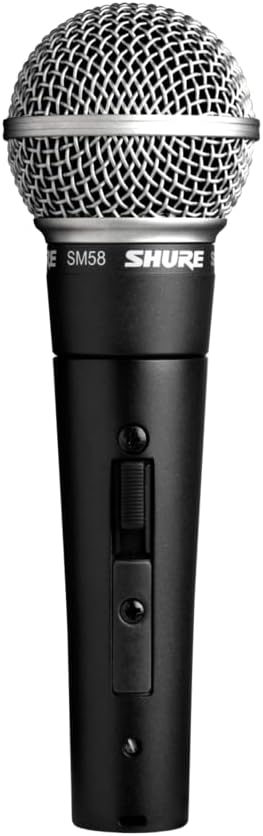
Shure SM58S Pro XLR Dynamic Vocal Microphone
A cardioid dynamic vocal microphone with an on/off switch and XLR output, so it mutes between songs without unplugging from a mixer.
- XLR output
- Polar pattern: Cardioid
- 2 year warranty stated

Pyle 3 Piece Professional Dynamic Microphone Kit
Cardioid dynamic microphones with 26ft XLR cables, holders and a hard carry case for a live setup.
- XLR output
- Polar pattern: Cardioid
- 1-year warranty stated
These come from our ranked list Best Dynamic Microphone for Live Performance, which compares them spec by spec.
Frequently asked questions
Do drum microphones need phantom power?
No. Dynamic microphones make their signal without outside power, so they do not need 48V phantom power from the mixer or interface. Leave phantom power off for the drum channels.
Can a vocal microphone work on a drum set?
A cardioid dynamic vocal microphone connects to the same mixer on an XLR cable, so it works as a spare on stage. It is built for vocals, so keep it for vocals and use an instrument microphone on the drums.
How do I stop cymbals bleeding into the snare microphone?
Aim the back of the cardioid microphone at the cymbal, since a cardioid pattern rejects sound from behind the mic. Move the microphone closer to the snare head and angle it away from the hi-hat until the snare stands out.
What cables do drum microphones need?
A balanced XLR cable from each microphone to the mixer or audio interface, with a spare cable in the bag for a failure on the night.
Ranked dynamic microphones lists
More how-to guides
Product details come from each Amazon listing and can change. Check the listing before you buy.