What Does Cardioid Mean on a Microphone?
Updated Nov 12, 2026 · By  Jonah Mercer · Editorial policy
As an Amazon Associate I earn from qualifying purchases. Buying through the Amazon links on this page costs you nothing extra. Full disclosure
Cardioid means a microphone picks up sound mainly from the front and rejects sound from the rear, in a heart-shaped pattern. The pattern is also called unidirectional. A cardioid microphone suits podcasting, singing, and public speech, where the voice sits in front of the mic and other sound sits behind it.
What cardioid means
A cardioid polar pattern describes how a microphone hears sound from different directions. The pattern takes its name from its heart shape: pickup is strongest at the front of the microphone, weaker at the sides, and weakest at the rear. All 4 microphones in this guide use a cardioid pattern, and each lists it in its specs. The NEEWER NW-040 states the point directly: its unidirectional cardioid pattern emphasizes pickup from the front while minimizing unwanted background noise from the rear and sides.
How a cardioid pattern shapes a recording
Because a cardioid microphone favors sound from the front, the voice or instrument you point it at comes through while sound from behind it drops back. The Sennheiser e 935 describes this as insulation from other on-stage signals. That behavior helps in a room with several sound sources, since the mic favors the source in front of it. It also helps with feedback: the NEEWER NW-040 notes that its cardioid pattern gives high gain before feedback. The pattern does not change the sound of the source itself; it changes how much of everything else reaches the mic.
Where to place a cardioid microphone
Point the front of the microphone at the sound you want to record and point the rear toward the sound you want to reduce. Speak or sing into the front of the mic, not into its side or rear. Keep the microphone close to the source so the voice stays ahead of room sound, and keep other sound sources behind the mic where the pattern rejects them. The Rode PodMic has an integrated yoke mount for positioning on a stand or boom arm, so you can set the angle and keep it there.
What cardioid does not do
A cardioid pattern reduces sound from the rear and sides, but it does not remove background sound entirely. Sound from the sides still reaches the mic at a lower level, and loud sound from behind can still be heard. If the recording still picks up too much room sound, move the microphone closer to the source or move the noise source further behind the mic.
What you need

Rode RØDE PodMic Cardioid Dynamic Broadcast Microphone
A cardioid dynamic microphone with an internal pop filter and shockmount, a yoke mount for positioning on a stand or boom arm, and a 2-year warranty.
- XLR output
- Polar pattern: Cardioid
- 2-year warranty stated

NEEWER NW-040 Cardioid Dynamic Microphone with XLR
A cardioid dynamic microphone with an XLR cable in the box, a metal housing, and a unidirectional pattern that emphasizes pickup from the front.
- XLR output
- Polar pattern: Cardioid
- 1-year warranty stated

Sennheiser Pro Audio e 935 Cardioid Dynamic
A cardioid dynamic vocal microphone with a metal casing, a shock-mounted capsule, and a 10 year warranty.
- XLR output
- Polar pattern: Cardioid
- 10 year warranty stated
- 0.8 lb, the lightest here
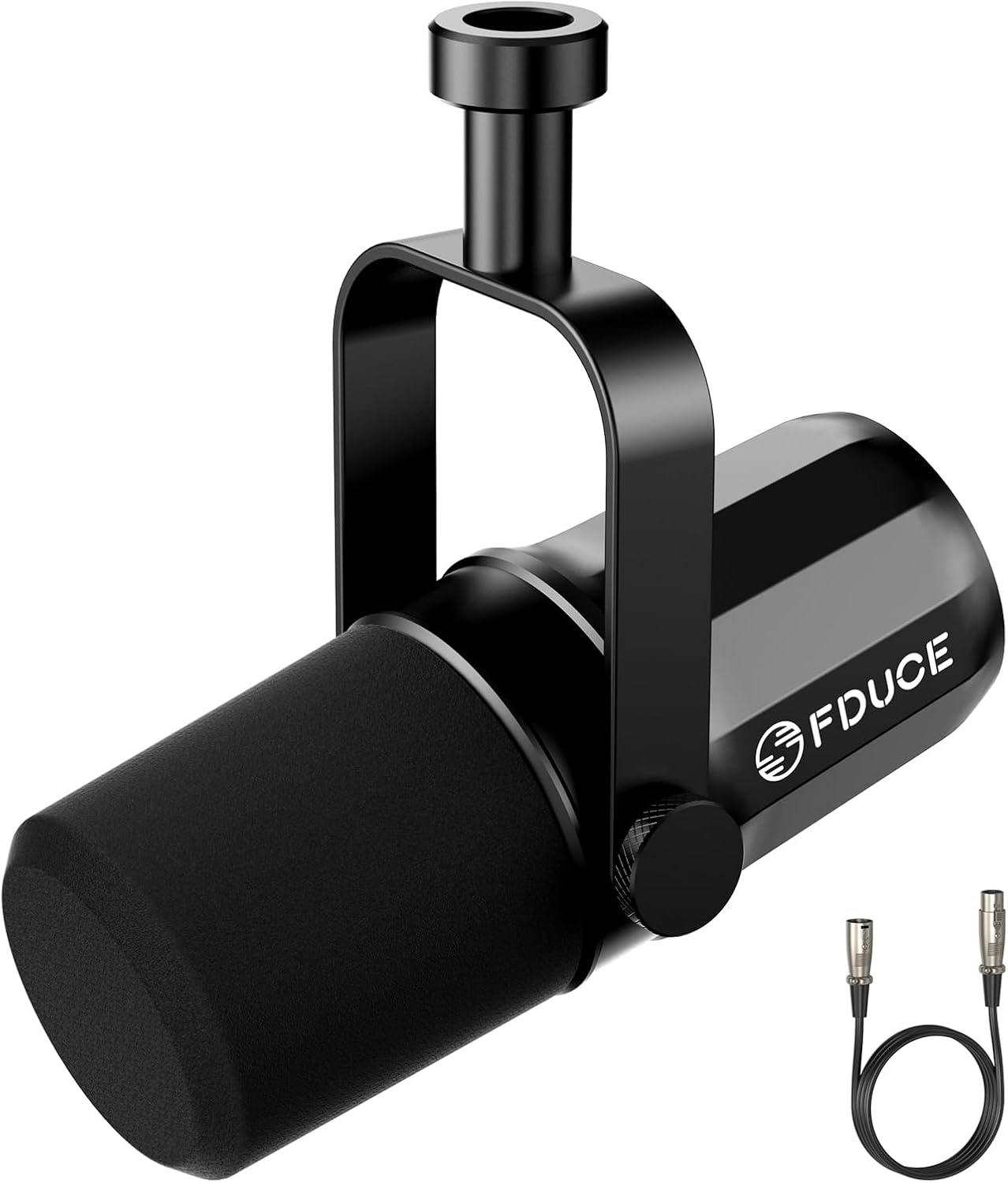
FDUCE SL40X XLR Dynamic Podcast Microphone
A cardioid dynamic podcast microphone with an all-metal build, voice isolation tech, and a 2m XLR cable in the package.
- XLR output
- Polar pattern: Cardioid
- 1-year warranty stated
These come from our ranked list Best Cardioid Dynamic Microphone, which compares them spec by spec.
Frequently asked questions
Does cardioid mean the microphone only hears from the front?
No. A cardioid microphone hears best from the front and least from the rear, but sound from the sides still reaches it at a lower level. The pattern reduces background sound instead of removing it.
What is the difference between cardioid and omnidirectional?
A cardioid microphone is unidirectional: it favors sound from the front and rejects sound from the rear. An omnidirectional microphone picks up sound from all directions around it, so it does not reject background sound the way a cardioid does.
Do I need phantom power for a cardioid microphone?
It depends on the microphone type, not on the cardioid pattern. The 4 microphones in this guide are dynamic microphones, and dynamic microphones do not need phantom power. A cardioid condenser microphone does need 48V phantom power from an interface or mixer.
Ranked dynamic microphones lists
More how-to guides
Product details come from each Amazon listing and can change. Check the listing before you buy.