Cardioid vs Dynamic Mic Explained
Updated Nov 13, 2026 · By  Jonah Mercer · Editorial policy
As an Amazon Associate I earn from qualifying purchases. Buying through the Amazon links on this page costs you nothing extra. Full disclosure
Cardioid and dynamic are different labels for a microphone, not kinds to choose between. Cardioid is the polar pattern: the mic picks up sound from the front. Dynamic is the transducer type: a moving coil turns the sound into a signal. The 4 mics below are all cardioid dynamic mics with XLR outputs.
Cardioid is the pattern
The polar pattern is the direction the mic picks up sound from. A cardioid mic picks up sound from the front and rejects sound from behind and the sides. The 4 mics below are all cardioid: the Rode, the NEEWER, the Sennheiser and the FDUCE. A cardioid pattern suits a single voice in front of the mic.
Dynamic is the transducer
The transducer is the part that turns sound into a signal. A dynamic mic uses a moving coil: the NEEWER has a moving coil transducer. A condenser mic uses a capsule that needs 48V phantom power instead.
What comes in the box
Check the cable and the mount before you buy. The Rode comes with an internal shock mount and a built-in pop filter. The NEEWER comes with an XLR cable, and the FDUCE comes with a 2m XLR cable and a detachable mic stand. The Sennheiser comes with a mic clamp, a pouch and a user manual. The Rode mount fits 3/8-inch and 5/8-inch threads.
Look after the microphone
Keep the mic in its pouch or case when you are not using it. Wipe the body with a soft dry cloth, and keep the capsule dry. The Sennheiser comes with a pouch, and the Rode has an all-metal body. For a fault in the capsule or the electronics, ask a repair shop.
What you need

Rode RØDE PodMic Cardioid Dynamic Broadcast Microphone
A cardioid dynamic mic with an internal pop filter, an internal shock mount and a yoke mount, for podcasting and broadcasting.
- XLR output
- Polar pattern: Cardioid
- 2-year warranty stated

NEEWER NW-040 Cardioid Dynamic Microphone with XLR
A cardioid dynamic mic with a moving coil transducer, an XLR cable and a metal housing, for voice and instruments.
- XLR output
- Polar pattern: Cardioid
- 1-year warranty stated

Sennheiser Pro Audio e 935 Cardioid Dynamic
A cardioid dynamic vocal mic with a shock-mounted capsule, a hum-compensating coil, a mic clamp and a pouch.
- XLR output
- Polar pattern: Cardioid
- 10 year warranty stated
- 0.8 lb, the lightest here
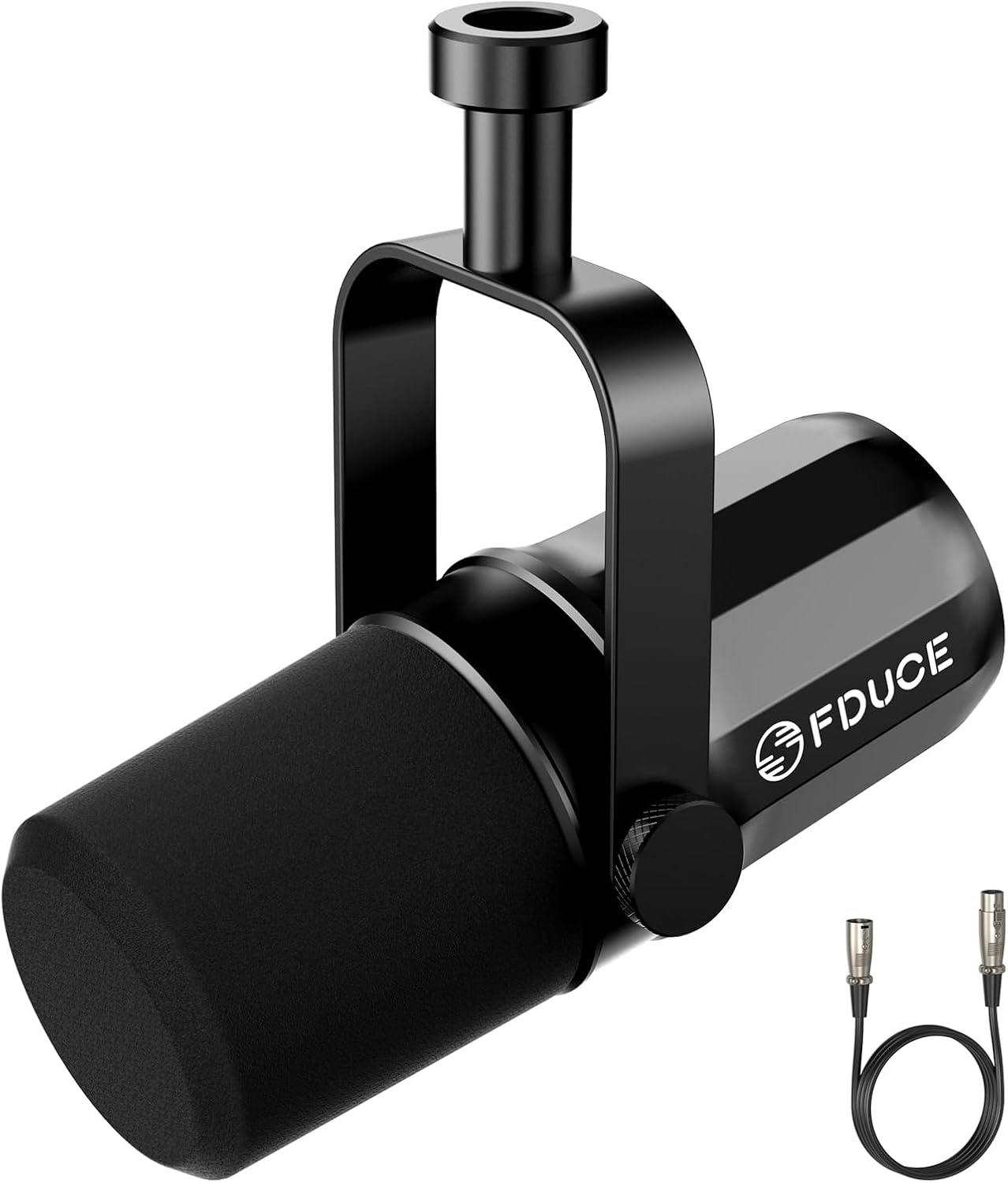
FDUCE SL40X XLR Dynamic Podcast Microphone
A cardioid dynamic mic with voice isolation tech, a 2m XLR cable and a detachable mic stand, for vocal recording and streaming.
- XLR output
- Polar pattern: Cardioid
- 1-year warranty stated
These come from our ranked list Best Cardioid Dynamic Microphone, which compares them spec by spec.
Frequently asked questions
Do dynamic mics need phantom power?
No. A dynamic mic uses a moving coil and needs no phantom power to work. A condenser mic needs 48V phantom power from the interface or mixer it plugs into.
What does cardioid mean on a microphone?
Cardioid is the polar pattern: the mic picks up sound from the front and rejects sound from behind and the sides. The 4 mics here are all cardioid, with XLR outputs.
Can I use a cardioid dynamic mic for podcasting?
Yes. The Rode is a cardioid dynamic mic for podcasting, recording and broadcasting, with an internal pop filter and shock mount. The FDUCE is for vocal recording, streaming and gaming.
What cable does a dynamic mic use?
The 4 mics here use XLR outputs. The NEEWER comes with an XLR cable, and the FDUCE comes with a 2m XLR cable. Check the cable before you buy.
Ranked dynamic microphones lists
More how-to guides
Product details come from each Amazon listing and can change. Check the listing before you buy.