Types of Dynamic Microphones Explained
Updated Nov 13, 2026 · By  Jonah Mercer · Editorial policy
As an Amazon Associate I earn from qualifying purchases. Buying through the Amazon links on this page costs you nothing extra. Full disclosure
Dynamic microphones come in types set by their polar pattern and their built-in features. The mics here are all XLR mics: the Audio-Technica AT2040 is hypercardioid, and the Shure SM7dB, FDUCE SL40X and Rode PodMic are cardioid. The Shure SM7dB adds a built-in preamp, the AT2040 has an integrated shock mount, and the PodMic has an internal shock mount.
Cardioid and hypercardioid patterns
A polar pattern is the direction a microphone picks up sound from. A cardioid mic picks up sound from the front and rejects sound from the sides and rear, which suits a voice recorded in a room with other noise. A hypercardioid mic narrows that pickup further and rejects more sound from the sides and rear. The Shure SM7dB, FDUCE SL40X and Rode PodMic are cardioid, and the Audio-Technica AT2040 is hypercardioid.
Built-in preamps and gain
A dynamic microphone sends a low signal, so it needs gain from a preamp before the sound reaches your interface. The Shure SM7dB has a built-in preamp with selectable +18 dB or +28 dB of gain, so it drives an XLR interface without a separate inline preamp. The FDUCE SL40X connects to interfaces through XLR without a built-in preamp. Check whether your interface supplies enough gain before you pick a mic without a preamp.
Shock mounts and pop filters
A shock mount keeps knocks and vibration from the stand out of the recording, and a pop filter tames the burst of air from p and b sounds. The Audio-Technica AT2040 has an integrated shock mount and a multistage windscreen for pop filtering, and the Rode PodMic has an internal shock mount and a built-in pop filter. The Shure SM7dB has air suspension shock isolation and a detachable windscreen. Check that the mount fits your stand: the AT2040 includes a 5/8-inch to 3/8-inch threaded adapter, and the PodMic has dual 3/8-inch and 5/8-inch threads.
XLR connection and weight
All the mics here connect through XLR to an interface, mixer or console, so you need an XLR input to use them. The FDUCE SL40X includes a 2m XLR cable in the box. Weight matters on a boom arm: the FDUCE SL40X weighs 1 lb, the Rode PodMic 2.1 lb, the Audio-Technica AT2040 2.2 lb and the Shure SM7dB 2.7 lb. Check the weight your arm holds before you mount a mic.
What you need

Audio-Technica AT2040 Hypercardioid Dynamic Podcast Microphone Hypercardioid
A hypercardioid dynamic mic with an integrated shock mount, a multistage windscreen, a pivoting stand mount and a 2-year warranty.
- XLR output
- Polar pattern: Hypercardioid
- 2-year warranty stated

Shure SM7dB Dynamic Vocal Mic with Preamp
A cardioid dynamic vocal mic with a built-in preamp offering +18 dB or +28 dB of gain, EQ switches and a 2-year warranty.
- XLR output
- Polar pattern: Cardioid
- 2-year warranty stated
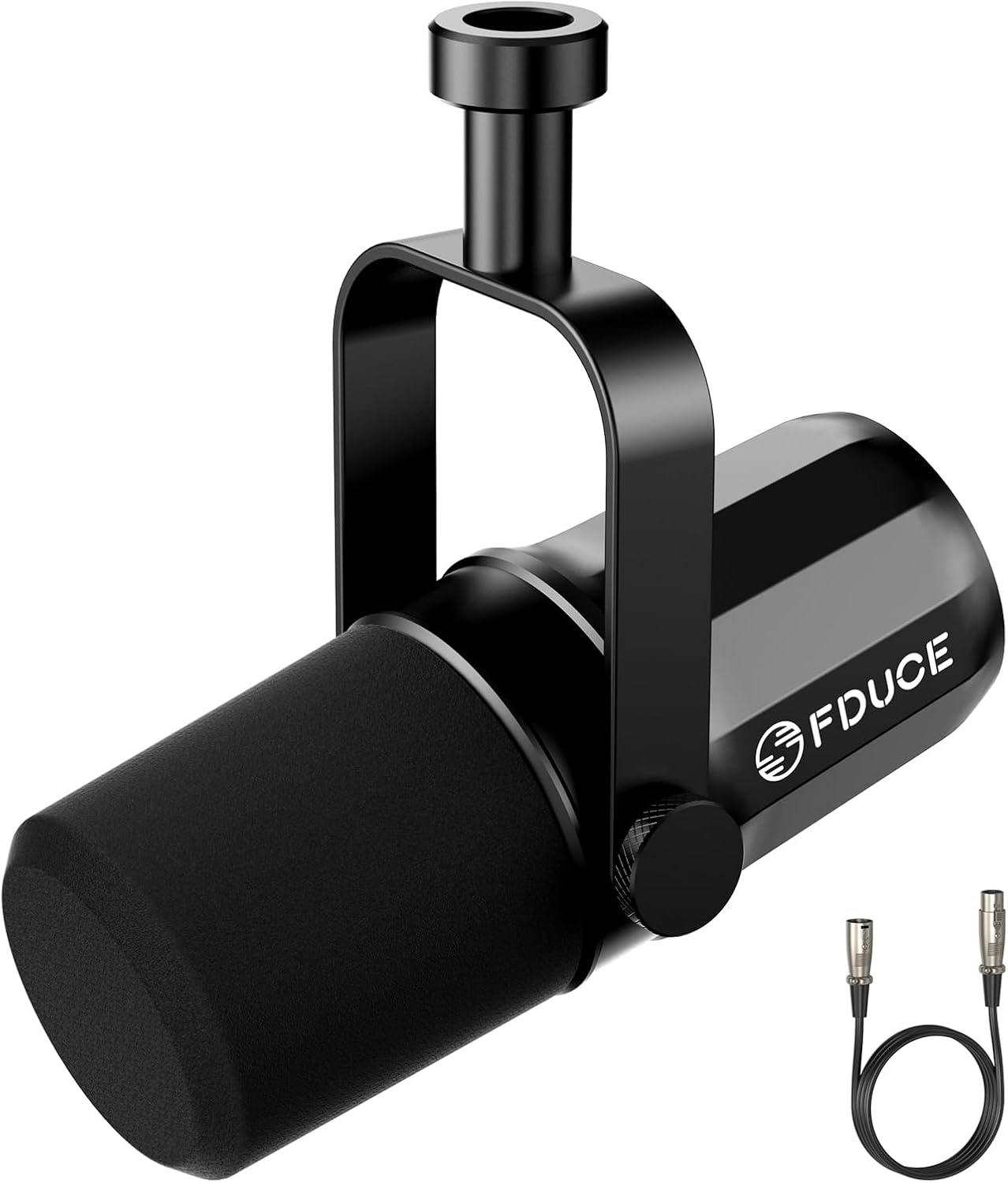
FDUCE SL40X XLR Dynamic Podcast Microphone
A cardioid dynamic mic with all-metal construction, a 2m XLR cable in the box and a 1-year warranty, at 1 lb.
- XLR output
- Polar pattern: Cardioid
- 1-year warranty stated
- 1 lb, the lightest here

Rode RØDE PodMic Cardioid Dynamic Broadcast Microphone
A cardioid dynamic broadcast mic with an internal pop filter, an internal shock mount, a yoke mount and a 2-year warranty.
- XLR output
- Polar pattern: Cardioid
- 2-year warranty stated
These come from our ranked list Best Dynamic Microphone, which compares them spec by spec.
Frequently asked questions
Do dynamic microphones need phantom power?
No. A dynamic microphone makes its signal without outside power, so it does not need 48V phantom power. Condenser microphones need 48V to work.
What is the difference between cardioid and hypercardioid?
A cardioid mic picks up sound from the front and rejects sound from the sides and rear. A hypercardioid mic narrows that pickup further, so it rejects more sound from the sides and rear. The AT2040 is hypercardioid, and the Shure SM7dB, FDUCE SL40X and Rode PodMic are cardioid.
Can I use a dynamic mic for podcasting?
Yes. The mics here are made for podcasting, streaming, recording or voiceover, and they connect through XLR to an interface. Pick the polar pattern and the features that fit your room and your setup.
Ranked dynamic microphones lists
More how-to guides
Product details come from each Amazon listing and can change. Check the listing before you buy.