Digital vs Acoustic Piano: Key Differences
Updated Nov 11, 2026 · By  Jonah Mercer · Editorial policy
As an Amazon Associate I earn from qualifying purchases. Buying through the Amazon links on this page costs you nothing extra. Full disclosure
A digital piano plays sampled sound through speakers and needs power, while an acoustic piano makes sound from strings struck by hammers and needs no power. A full piano of either kind has 88 keys. The choice comes down to volume control, moving the instrument, and how much upkeep you want to take on.
How each piano makes sound
A digital piano stores recorded piano tones and plays them back through built-in speakers when you press a key. The GLARRY has 380 tones and the Donner has 238 tones, so one instrument can sound like several. An acoustic piano has strings inside, and a hammer strikes a string when you press a key, so the sound comes from the string itself with no speakers or power involved.
Volume and quiet playing
A digital piano lets you turn the volume down or plug in headphones and play without sound in the room. The GLARRY has a 3.5mm headphone jack, and the Yamaha P71 and the UISCOM each have headphone jacks for quiet playing.
Moving the instrument and the space it needs
A digital piano is lighter than an acoustic piano, so it moves with less effort and needs less help to shift. The Yamaha P71 weighs 25 lb and the GLARRY weighs 26.5 lb, while the Donner weighs 54.6 lb with its stand. An acoustic piano is heavy and stays where it is put, so measure the doorways and the floor space before you buy one.
Upkeep and tuning
A digital piano never needs tuning, and its upkeep is a wipe with a soft dry cloth and a check of the cables. An acoustic piano needs a tuner to visit and adjust the strings, and the hammers and keys wear with use. If you want an instrument that stays in tune on its own, a digital piano is the simpler choice.
What you need

GLARRY 88-Key Semi-Weighted Digital Piano
An 88-key semi-weighted digital piano with 380 tones, 128-note polyphony, Bluetooth audio, USB-MIDI, and a triple pedal set.
- Keys: 88
- Weighted / hammer action
- Max polyphony: 128
- Built-in sounds: 380
- Speaker power: 17 W
- Bluetooth
- USB-MIDI
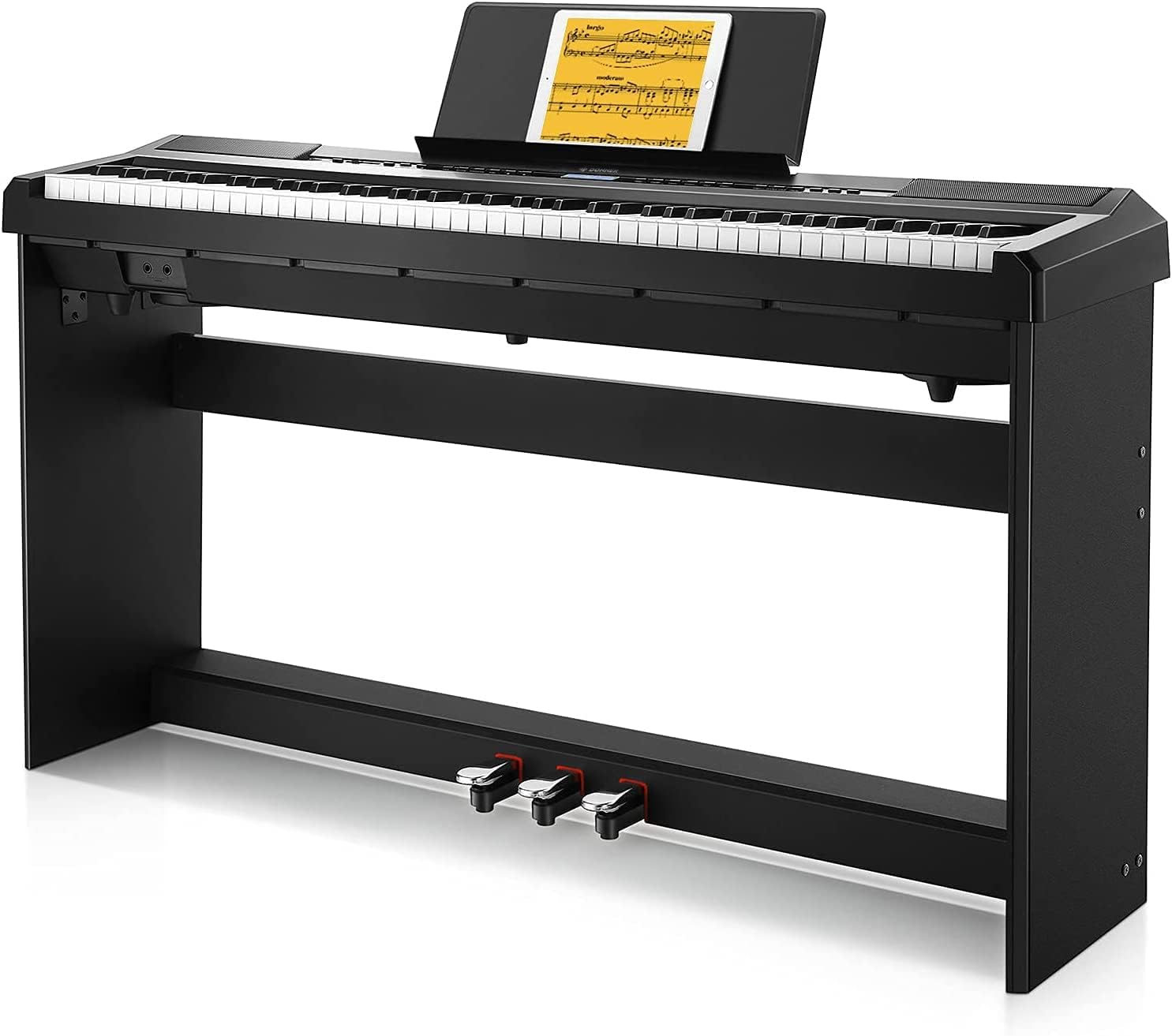
Donner DEP-20 Beginner Digital Piano 88 Key
An 88-key full-weighted digital piano with 238 tones, 128-note polyphony, two 25W amplifiers, and a furniture stand with a 3-pedal unit.
- Keys: 88
- Weighted / hammer action
- Max polyphony: 128
- Built-in sounds: 238
- USB-MIDI

YAMAHA P71 88-Key Weighted Action Digital Piano
An 88-key weighted-action digital piano with 10 voices, Dual Mode for blending two voices, and an included sustain pedal.
- Keys: 88
- Weighted / hammer action
- Built-in sounds: 10
- 1 year warranty stated

UISCOM 88 Key Weighted Home Digital Piano
An 88-key progressive hammer-action digital piano with 8 tones, MIDI, dual headphone jacks, and triple pedals with sustain, sostenuto, and soft.
- Keys: 88
- Weighted / hammer action
- USB-MIDI
These come from our ranked list Best Digital Piano, which compares them spec by spec.
Frequently asked questions
Do digital pianos need tuning?
No. A digital piano plays recorded tones through speakers, so there are no strings to tune. An acoustic piano has strings that a tuner adjusts.
Can you play a digital piano with headphones?
Yes. The GLARRY has a 3.5mm headphone jack, and the Yamaha P71 and the UISCOM each have headphone jacks, so you can play without sound in the room.
How many keys does a full piano have?
A full piano has 88 keys. All four digital pianos in this guide have 88 keys, with weighted or semi-weighted action.
Does a digital piano need power?
Yes. A digital piano needs power for its speakers and controls, while an acoustic piano makes sound from strings and hammers with no power.
Ranked digital pianos lists
More how-to guides
Product details come from each Amazon listing and can change. Check the listing before you buy.