Are Keyboards and Pianos the Same?
Updated Nov 12, 2026 · By  Jonah Mercer · Editorial policy
As an Amazon Associate I earn from qualifying purchases. Buying through the Amazon links on this page costs you nothing extra. Full disclosure
No. A piano makes its sound when hammers strike strings, while a keyboard or digital piano plays recorded piano sounds through speakers or headphones. They share the same key layout, and a full piano has 88 keys, which the digital pianos shown here have. What differs is how the sound is made and what else the instrument can do.
How a piano makes its sound
An acoustic piano makes sound when a hammer strikes a string for each key. A digital piano or keyboard plays recorded sounds through built-in speakers or headphones. That is the main difference between the two, even when the keys look the same and the layout matches.
What the keys have in common
A full piano has 88 keys, and each digital piano shown here has 88 keys too. The GLARRY has semi-weighted keys, while the Donner has full-weighted hammer-action keys, the Yamaha has weighted action, and the UISCOM has progressive hammer action. Weighted keys add resistance under your fingers, which is how acoustic piano keys work.
What a keyboard adds beyond piano sound
A digital piano can play more than piano sound. The GLARRY lists 380 tones and 128 rhythms, the Donner lists 238 tones, the Yamaha lists 10 voices, and the UISCOM lists 8 tones. The GLARRY and the UISCOM also list demo songs for listening, and the GLARRY, Donner and UISCOM list MIDI for sending your playing to music software.
How to tell them apart when you shop
Start with the key count: a full piano has 88 keys, and the digital pianos shown here each have 88. Then check whether the keys are weighted or hammer action, and whether the instrument has built-in speakers, a headphone jack and pedals. The GLARRY, Donner and UISCOM each list a triple pedal set, while the Yamaha lists an included sustain pedal.
What you need

GLARRY 88-Key Semi-Weighted Digital Piano
An 88-key semi-weighted digital piano with 380 tones, 128-note polyphony, Bluetooth audio, USB-MIDI and a triple pedal set.
- Keys: 88
- Weighted / hammer action
- Max polyphony: 128
- Built-in sounds: 380
- Speaker power: 17 W
- Bluetooth
- USB-MIDI
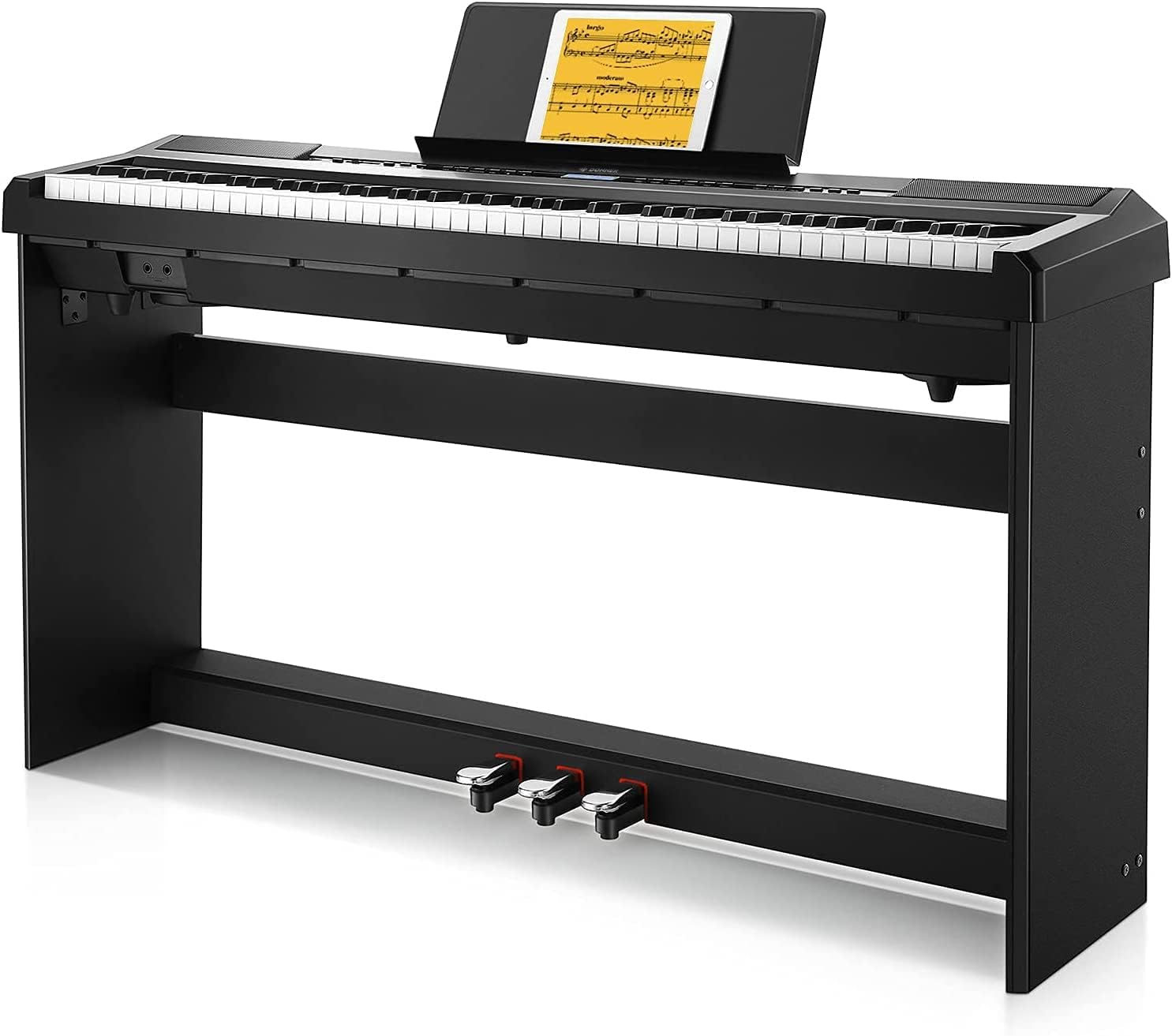
Donner DEP-20 Beginner Digital Piano 88 Key
An 88-key full-weighted hammer-action digital piano with 238 tones, dual-tone mode, a backlit LCD screen and a furniture stand.
- Keys: 88
- Weighted / hammer action
- Max polyphony: 128
- Built-in sounds: 238
- USB-MIDI

YAMAHA P71 88-Key Weighted Action Digital Piano
An 88-key weighted-action digital piano with 10 voices, dual mode and an included sustain pedal.
- Keys: 88
- Weighted / hammer action
- Built-in sounds: 10
- 1 year warranty stated

UISCOM 88 Key Weighted Home Digital Piano
An 88-key weighted digital piano with progressive hammer action, 8 tones, 40 demo songs, MIDI and triple pedals.
- Keys: 88
- Weighted / hammer action
- USB-MIDI
These come from our ranked list Best Digital Piano, which compares them spec by spec.
Frequently asked questions
Can a keyboard sound like a real piano?
A digital piano plays recorded piano sounds through its speakers or headphones, not from strings. The Yamaha P71 lists 10 voices, including a grand piano voice, and its weighted action copies how acoustic piano keys work. The sound still comes from speakers, so it is not the same as a piano with strings.
Do keyboards have the same number of keys as pianos?
A full piano has 88 keys, and each digital piano shown here has 88 keys. The GLARRY has semi-weighted keys, the Donner has full-weighted hammer-action keys, and the Yamaha and UISCOM have weighted action. Key count is listed in the specs, so check it on any keyboard you compare.
Can I use headphones with a digital piano?
Yes. The GLARRY has a 3.5mm headphone jack, and the UISCOM has dual headphone jacks. The Donner lists a 6.35mm headphones jack, and the Yamaha lists a 3.5mm jack. Headphones let you play without sound from the speakers.
What does weighted action mean?
Weighted action adds resistance to the keys, so they feel closer to acoustic piano keys. The Donner also lists adjustable touch response, so you can change how the keys respond to your fingers. The GLARRY uses semi-weighted keys, while the Donner, Yamaha and UISCOM list weighted or hammer action.
Ranked digital pianos lists
More how-to guides
Product details come from each Amazon listing and can change. Check the listing before you buy.