Best Microphone Preamp (2026): 5 Picks Compared
Updated Oct 24, 2026 · By  Jonah Mercer · Ranked from listed specifications · How we rank
As an Amazon Associate I earn from qualifying purchases. Buying through the Amazon links on this page costs you nothing extra. Full disclosure
The Triton Audio FetHead leads this list as Best Overall: an in-line preamp that adds 27 dB of gain to ribbon and dynamic microphones, powered by 48V phantom power through the XLR cable. If you record two microphones at once, the Cloudlifter CL-2 is the two-channel pick, with 25 dB of gain per channel.
The picks at a glance
Which one should you buy?
- Owners of ribbon or dynamic microphones: Triton Audio FetHead in-Line Microphone Preamp See pick 1
- Podcasters who want more gain for a passive microphone: Cloud Microphones See pick 2
- Podcasters who record two microphones at once: Cloud Microphones See pick 3
- Podcasters who want clean gain for a dynamic microphone: SE ELECTRONICS DM1 Dynamite Ultra-Slim Inline Microphone See pick 4
- Players who want a tube stage with drive control: Presonus TubePre v2 Tube Preamplifier DI Box See pick 5More picks: Best Tube Microphone Preamp
Want the full range? Best Mic Preamp ranks the top mic preamps for every buyer, or browse all 27 guides.
The 5 picks, ranked
1Best Overall

Triton Audio FetHead in-Line Microphone Preamp
- Max gain: 27 dB
- 48V phantom power
It earns Best Overall with 27 dB of gain for ribbon and dynamic microphones in an in-line XLR unit.
Who it suits
- Owners of ribbon or dynamic microphones
- Buyers who want a 0.2 lb in-line preamp
Skip it if
- You want a tube-based preamp
- You want a tube drive saturation control
The FetHead adds 27 dB of gain to ribbon and dynamic microphones, with a low-noise Class-A JFET amplifier and a shielded enclosure. It draws its power from 48V phantom power through the XLR cable. It weighs 0.2 lb and uses four matched JFETs in its circuit.
2Runner-Up

It earns Runner-Up with 25 dB of gain for passive microphones, without passing phantom power to the mic.
Who it suits
- Podcasters who want more gain for a passive microphone
- Owners of passive ribbon microphones
Skip it if
- You want two channels in one unit
- You want a preamp with gain and drive controls
The CL-1 adds 25 dB of gain to passive microphones, using phantom power without passing it to the microphone itself. It is compatible with tube, battery or power supply driven microphones and is safe for passive ribbons. It has an XLR connector, a stainless steel enclosure and a 35 dB signal-to-noise ratio.
3Also Great

It earns Also Great with two channels of 25 dB gain each for dynamic and ribbon microphones.
Who it suits
- Podcasters who record two microphones at once
- Buyers who want 25 dB per channel
Skip it if
- You want a single-channel unit
- You want a preamp that weighs under 1 lb
The CL-2 adds 25 dB of gain per channel across two channels for dynamic and ribbon microphones, using phantom power without passing it to the microphones. It is compatible with tube, battery or power supply driven microphones and is safe for passive ribbons. It has an alloy steel enclosure, XLR connectors and a 70 dB signal-to-noise ratio.
4Also Great

SE ELECTRONICS DM1 Dynamite Ultra-Slim Inline Microphone
- Max gain: 28 dB
- 48V phantom power not stated in the listing
- DI / XLR out
- 2-year warranty stated
It earns Also Great with 28 dB of gain, gold-plated XLR connectors and an all-metal housing.
Who it suits
- Podcasters who want clean gain for a dynamic microphone
- Buyers who want a 2-year warranty
Skip it if
- You want a two-channel unit
- You want a preamp with a drive control
The DM1 adds 28 dB of clean gain to dynamic and passive ribbon microphones, with a Class-A FET circuit and a transformerless design. It has gold-plated XLR connectors, an all-metal housing and a buffer amplifier that reduces RF interference, buzz and hum. It weighs 0.2 lb and carries a 2-year warranty, extended to 3 years if registered online.
5Also Great

Presonus TubePre v2 Tube Preamplifier DI Box
- Max gain not stated in the listing
- 48V phantom power
- 1-year warranty stated
It earns Also Great with a 12AX7 tube stage, separate instrument and mic inputs and a 1-year warranty.
Who it suits
- Players who want a tube stage with drive control
- Buyers who want separate instrument and mic inputs
Skip it if
- You want an in-line preamp under 1 lb
- You want a fixed-gain in-line unit
The TubePre v2 has a 12AX7 tube-based preamp with an XMAX solid-state input stage, plus gain control and a tube drive saturation control. It has separate instrument and mic inputs, phantom power, an HP filter, a -20 dB pad and polarity-reverse. It has XLR and 1/4-inch TRS connections, weighs 3 lb and carries a 1-year warranty.
Side by side
| Product | Max gain | 48V phantom power | DI / XLR out | Weight | Warranty |
|---|---|---|---|---|---|
| Triton Audio FetHead in-Line Microphone Preamp | 27 dB | Yes | Not stated | 0.2 lb | Not stated |
| Cloud Microphones | Not stated | Yes | Not stated | 0.7 lb | Not stated |
| Cloud Microphones | 25 dB | Yes | Not stated | 1 lb | Not stated |
| SE ELECTRONICS DM1 Dynamite Ultra-Slim Inline Microphone | 28 dB | Not stated | Yes | 0.2 lb | 2-year |
| Presonus TubePre v2 Tube Preamplifier DI Box | Not stated | Yes | Not stated | 3 lb | 1-year |
How we ranked these mic preamps
Every pick has at least 100 customer ratings on Amazon and a listing with real specifications. The order mixes two things: how each model compares on the specs below (higher share of the best value in this group scores more), and how widely it is bought. The spec score runs from 9.0 to 9.8 and only compares these picks with each other. A spec the listing does not state is left out and the other specs are re-weighted; a listing with fewer than 2 stated specs is scored at half. We do not test gear in person. Full method.
- Max gain weight 2
- 48V phantom power weight 1
Buying advice: microphone preamp
Match the gain to your microphone
Gain lifts a quiet microphone to a level your interface can use. The FetHead adds 27 dB, the Cloudlifter CL-1 and CL-2 add 25 dB, and the DM1 adds 28 dB. The TubePre v2 has a gain control instead of a fixed figure, so you set the level by ear. If your microphone sounds too quiet through your interface, an in-line preamp with a fixed gain figure is a direct fix.
Check phantom power before you buy
Four of the five preamps here use phantom power in some form. The FetHead runs on 48V phantom power through the XLR cable. The Cloudlifter CL-1 and CL-2 use phantom power without passing it to the microphone, which keeps passive ribbons safe. The TubePre v2 also has phantom power. Check that your interface supplies phantom power before you buy an in-line preamp.
Count the channels you record at once
One channel suits one microphone, while two channels suit two microphones at once. The Cloudlifter CL-2 has two channels, and the Cloudlifter CL-1, the DM1 and the TubePre v2 have one channel each. If you record two voices or two instruments at once, the two-channel pick is the one to compare.
Frequently asked questions
Do I need phantom power for an in-line preamp?
Most in-line preamps here need it. The FetHead, the Cloudlifter CL-1 and the Cloudlifter CL-2 run on phantom power from your interface. Check that your interface supplies it before you buy.
Will a preamp damage a ribbon microphone?
No, if the preamp keeps phantom power away from the microphone. The Cloudlifter CL-1 and CL-2 use phantom power without passing it to the microphone, and both are safe for passive ribbons. The FetHead is made for ribbon and dynamic microphones.
What is the difference between the CL-1 and CL-2?
The CL-1 has one channel and the CL-2 has two channels. Both add 25 dB of gain per channel and use phantom power without passing it to the microphone. Pick the CL-2 if you record two microphones at once.
Do I need a tube preamp for drive control?
No. The TubePre v2 is the only tube preamp here, with a 12AX7 tube stage and a tube drive saturation control. The other four add gain without a tube stage. Pick a tube stage if you want its drive control.
Gear that goes with it
 Best Dynamic MicrophoneTop pick: Audio-Technica AT2040 Hypercardioid Dynamic Podcast Microphone Hypercardioid
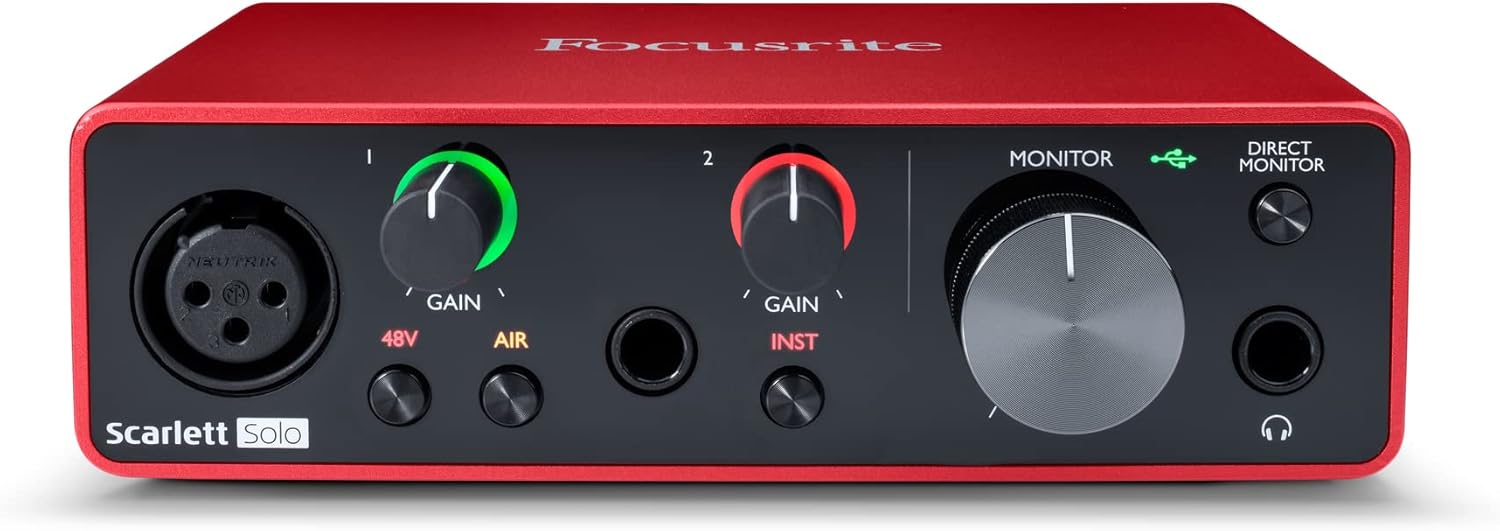 Best Audio InterfaceTop pick: Focusrite Scarlett Solo 3rd Gen USB-C Audio
 Best XLR CableTop pick: Cable Matters 2-Pack Premium XLR to XLR
More mic preamps guides
Specifications and availability come from each Amazon listing on Oct 24, 2026 and can change. Check the listing before you buy.