How to Tune a Cajon
Updated Nov 13, 2026 · By  Jonah Mercer · Editorial policy
As an Amazon Associate I earn from qualifying purchases. Buying through the Amazon links on this page costs you nothing extra. Full disclosure
Tune a cajon by setting the snares against the frontplate: tighter snares give a sharper snare sound, looser snares let the bass speak, and the screws around the frontplate set how the snares sit. Tap the center for bass and the top corners for snare, then adjust a little at a time until the two sounds balance.
Find the snares and the frontplate
Look inside the sound port or at the back of the cajon to find the snare wires or strings and see how they sit against the frontplate. The Meinl Jam Cajon has two fixed sets of steel snare wires, and the Meinl Pickup Cajon has two sets of fixed micro-coiled steel strings, 4 per side. The POGOLAB cajon has a snare wire inside on the root side, and the leaf side gives a deep tone.
Set the snare tension a little at a time
Tighten the snares a small amount and tap the frontplate, then loosen them a small amount and tap again, so you hear what each change does. Tighter snares give a sharper snare sound and less bass, while looser snares let the bass come through and soften the snare. Stop when the bass and the snare sound clear from where you sit.
Use the strike zones for bass and snare
Tap the center of the frontplate for bass and the top corners for snare, and keep your hands relaxed so the frontplate can move. The Meinl Jam Cajon gives bass and snare tone from the same frontplate, and the POGOLAB cajon gives a deep tone on the leaf side and a snare tone on the root side. If the snare buzzes when you play bass, tighten the snares a little more.
Set the pickup volume and tone
If the cajon has pickups, plug it into an amp or PA with a quarter-inch cable and set the volume and tone dials after the acoustic sound is right. The Meinl Pickup Cajon has three internal Piezo pickups, two dials and two quarter-inch jacks, and the pickups need no batteries. Turn the volume up a little at a time and use the tone dial to favor bass or snare.
What you need
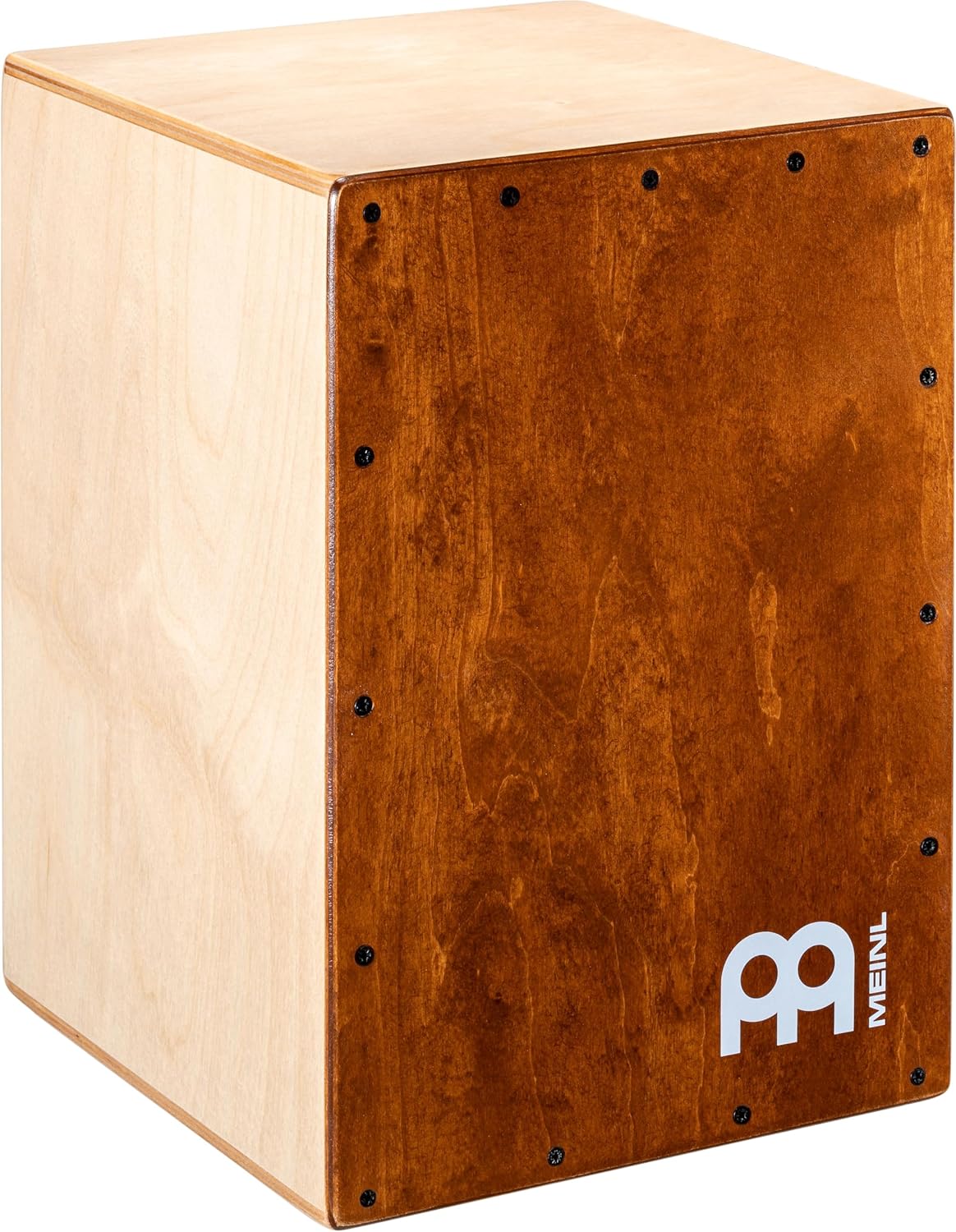
Meinl Percussion Cajon
A Baltic birch cajon with two fixed sets of steel snare wires, a 4 inch rear sound port and silicone feet, at 10.25 by 15 by 10.25 inches.
- Shell / body wood: Birch
- 2-year warranty stated

Meinl Pickup Cajon Box Drum with Internal
A Baltic birch cajon with makah burl frontplate, three internal Piezo pickups and volume and tone dials, for amp or PA use with a quarter-inch cable.
- Adjustable snare
- Shell / body wood: Birch
- 2-year warranty stated

POGOLAB Two-tone Cajon
A two-tone wooden cajon with an adjustable strap, deep on the leaf side and snare on the root side, in an octagonal shape with a 1-year warranty.
- 1-year warranty stated
These come from our ranked list Best Cajon, which compares them spec by spec.
Frequently asked questions
Can I tune a cajon with fixed snares?
Yes, in part. The snares stay where the maker put them, but you can still change how they sound by setting the frontplate screws and by choosing where you strike. Small changes to the screws change how hard the snares press on the frontplate.
Why does my cajon buzz when I play bass?
The snares vibrate with the bass note when they sit too loose against the frontplate. Tighten the snares a little at a time and tap the center again until the buzz fades and the bass comes through clean.
Where do I tap for bass and snare?
Tap the center of the frontplate for bass and the top corners for snare. The Meinl Jam Cajon gives bass and snare tone from the same frontplate, and the POGOLAB cajon gives a deep tone on the leaf side and a snare tone on the root side.
Does the pickup cajon need batteries?
No. The Meinl Pickup Cajon has three internal Piezo pickups that need no batteries, and two dials set the volume and tone. Plug it into an amp or PA with a quarter-inch cable, since the cable is not included.
Ranked cajons lists
Product details come from each Amazon listing and can change. Check the listing before you buy.