How to Put a Reed on a Clarinet
Updated Nov 11, 2026 · By  Jonah Mercer · Editorial policy
As an Amazon Associate I earn from qualifying purchases. Buying through the Amazon links on this page costs you nothing extra. Full disclosure
To put a reed on a clarinet, wet the reed, lay its flat side against the mouthpiece with the tip lined up, then hold it in place with the ligature. The ligature keeps the reed from moving while you play. Check that the reed is centered before you fit the mouthpiece to the clarinet.
Wet the reed first
Hold the reed under water or dip it in a glass of water until the flat side darkens and the reed feels damp through. A dry reed is stiff and can crack when the ligature presses it against the mouthpiece, so do not skip this step. Shake off the extra water before you handle the reed.
Lay the reed on the mouthpiece
Hold the mouthpiece with the flat side facing up. Set the reed on it with the flat side down, so the curved side faces out, and line up the tip of the reed with the tip of the mouthpiece. Slide the reed until it sits centered from side to side, with the same amount of mouthpiece showing on each side.
Fit the ligature over the reed
Slide the ligature down over the mouthpiece and the reed. Set the ligature so it covers the lower half of the reed and leaves the tip free. Turn the screws until the ligature holds the reed still without pressing it out of place.
Check the reed before you play
Look at the reed from the front and from the side. The tip of the reed should sit even with the tip of the mouthpiece, and the reed should run straight down the middle of the mouthpiece. If the reed sits off center, loosen the ligature, move the reed back into place, and tighten the screws again.
Take the reed off after you finish
Loosen the ligature screws and slide the ligature off the mouthpiece, then lift the reed away from the mouthpiece. Wipe the reed with a soft dry cloth and let it dry flat before you put it away. If the tip is bent or split, set that reed aside and use another one.
What you need
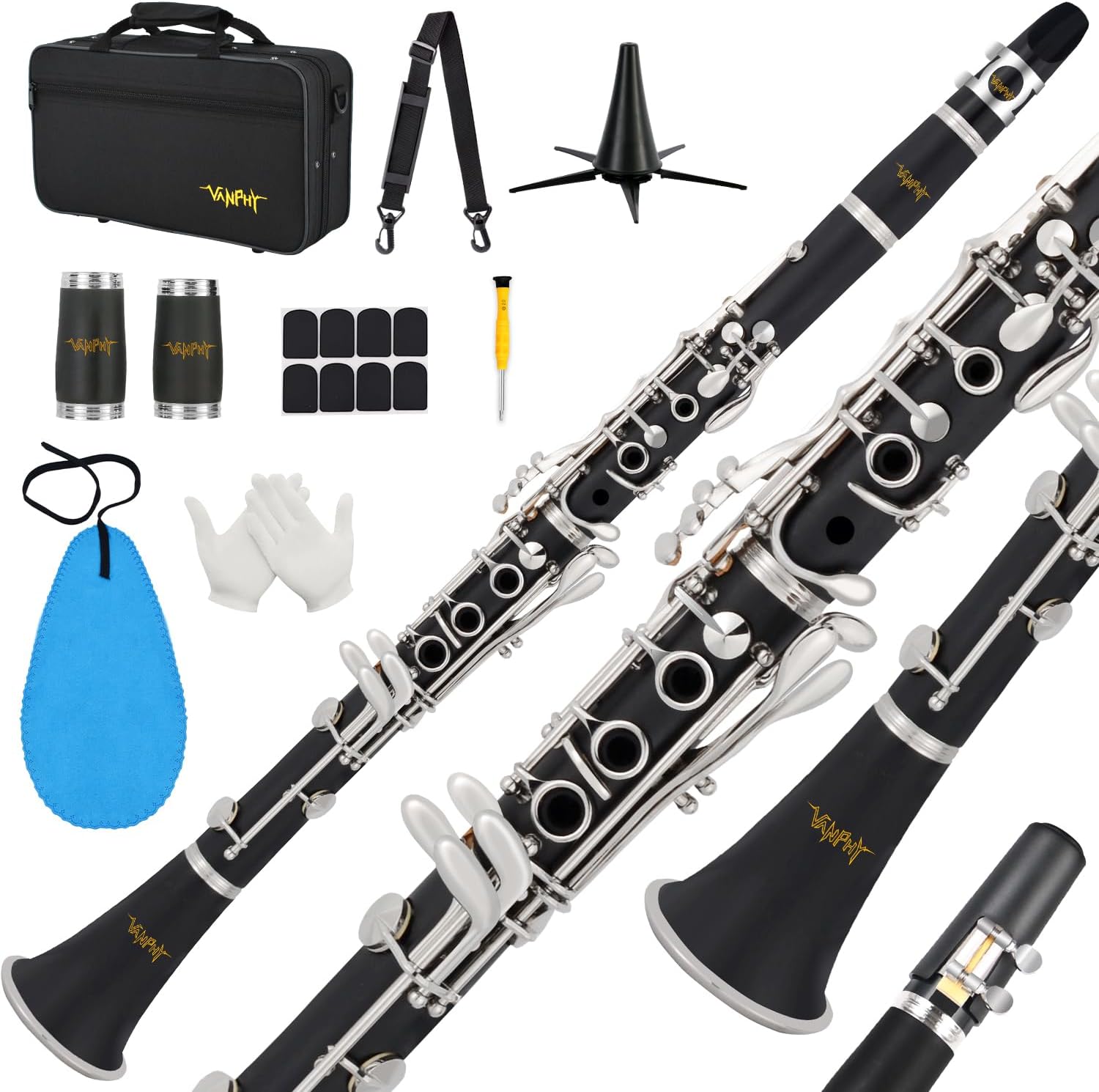
VANPHY Bb Clarinet 17 Keys Flat B Clarinet
A Bb clarinet with 17 keys, 2 barrels, and 8 mouthpiece cushions, with a case, stand and strap in the box.
- Case or gig bag included
- Mouthpiece included
- Key: Bb
- Body material: ABS
- Keys (on the body): 17
- 60-day warranty stated
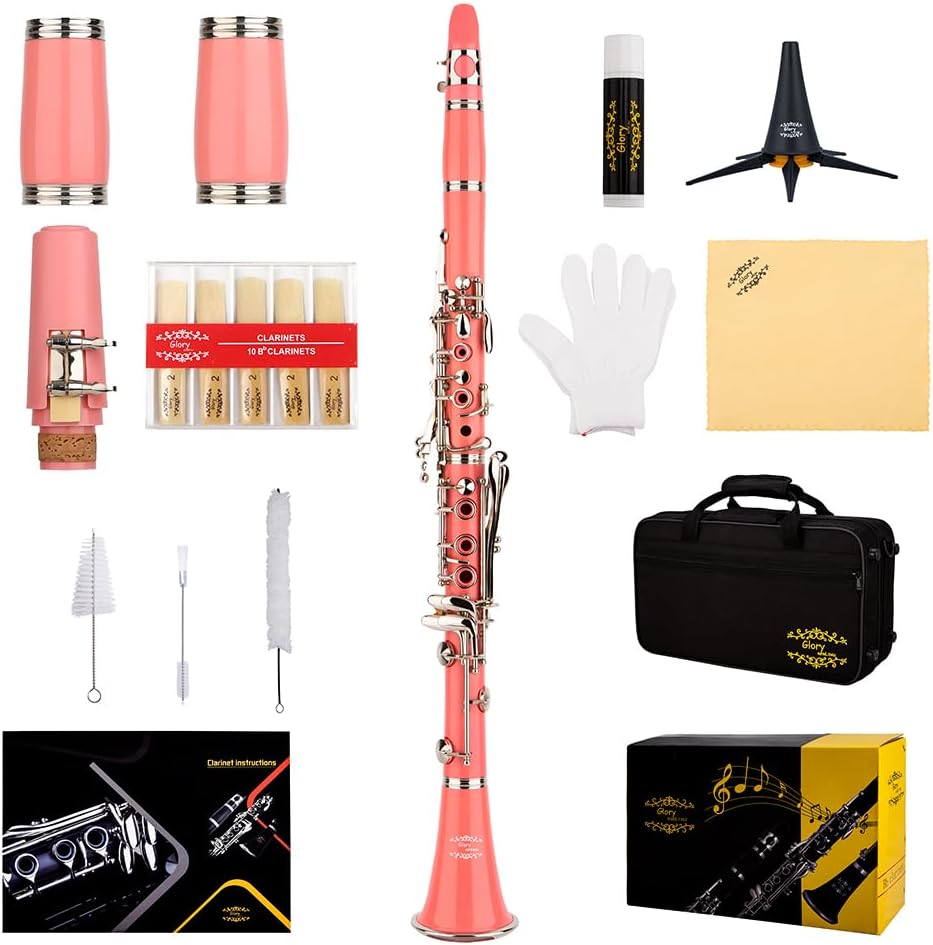
Glory GLY-CLAPK Professional Ebonite Bb Clarinet
A Bb clarinet in ebonite with 10 reeds, a stand, a hard case and a cleaning cloth in the box.
- Case or gig bag included
- Key: Bb
- Body material: Ebonite
- Reeds included: 10
- 30-day warranty stated

EASTROCK Bb Clarinet 17Nickel Keys ABS Material
A Bb clarinet with 17 nickel keys and 2 replaceable barrels, with a hard case, cleaning cloth and joint grease.
- Case or gig bag included
- Key: Bb
- Body material: ABS
- Keys (on the body): 17

SONICAKE B Flat Clarinet for Beginner
A Bb ebonite clarinet with 2 barrels and reeds, with a cleaning kit, white gloves and a hard case.
- Case or gig bag included
- Key: Bb
- Body material: Ebonite
- 90-day warranty stated
These come from our ranked list Best Clarinet, which compares them spec by spec.
Frequently asked questions
Which side of the reed goes against the mouthpiece?
The flat side of the reed goes against the flat side of the mouthpiece, with the curved side facing out. The flat side seals against the mouthpiece so air passes over the reed when you blow.
How tight should the ligature screws be?
Tighten the screws only until the reed stays in place when you pick up the mouthpiece. Screws that are too tight can bend the reed or press it out of line, so stop as soon as the reed holds still.
What do I do if the reed will not stay centered?
Loosen the ligature screws, slide the reed back to the middle of the mouthpiece, and tighten the screws again. Check the tip from the front to confirm it lines up with the tip of the mouthpiece.
Ranked clarinets lists
More how-to guides
Product details come from each Amazon listing and can change. Check the listing before you buy.