How Long Do Guitar Strings Last?
Updated Nov 11, 2026 · By  Jonah Mercer · Editorial policy
As an Amazon Associate I earn from qualifying purchases. Buying through the Amazon links on this page costs you nothing extra. Full disclosure
Guitar strings last until they stop holding tune, sound dull, or feel rough, and how soon that happens depends on how much and where you play. Coated strings and a wipe with a soft cloth after playing stretch that time, while sweat, humidity, and rust shorten it. Change strings when the signs show up, not on a fixed schedule.
Watch for the signs of wear
A string that will not stay in tune after you tune it, or that slips out of tune while you play, is past its best. Look for discoloration along the string, rust spots, or a rough feel where your fingers run, and listen for a tone that has gone dull or muted next to a fresh set. Coated strings hide wear longer, so check the plain steel strings first, since they show rust and discoloration before the wound strings do.
How much and where you play
Strings wear with playing time and with the air around them. Hands that sweat, a room with damp air, and a guitar left out of its case all shorten string life, while a wipe with a soft dry cloth after playing clears sweat and dirt from the wrap wire. Players who play daily will change strings more often than players who pick the guitar up once in a while, and a guitar that lives in its case between sessions keeps its strings longer than one left on a stand in a damp room.
Wipe strings down after playing
Run a soft dry cloth along each string after you play, from the nut to the bridge, to lift sweat and dirt before it settles on the wrap wire. Wipe the plain steel strings and the wound strings alike, and wipe the fretboard edge where the cloth can reach. A dry cloth is enough for routine care; if the strings feel sticky, ask a repair shop what cleaner suits the string type.
Coated or uncoated strings
A coating shields the wrap wire from sweat, corrosion, humidity, and rust, so a coated set is made for less frequent string changes than an uncoated set. The Elixir set below uses a NANOWEB coating, and the D'Addario set below uses a phosphor bronze wrap wire over a hexagonal high-carbon steel core. An uncoated set suits players who change strings often, while a coated set suits players who want fewer changes. Match the string type to how often you are willing to change strings, not to a calendar.
Store the guitar in its case
A case shields the strings from damp air, dust, and knocks between sessions. Keep the guitar in its case when you are not playing, and keep the case shut so the air inside stays steady. A guitar left out on a stand in a damp room will need new strings sooner than one that lives in its case, so storage is part of string care, not an afterthought.
What you need

D'Addario EJ16-3D Phosphor Bronze Acoustic Guitar Strings
A 3-set pack of phosphor bronze acoustic strings in 12-53 light gauge, precision wound over a hexagonal high-carbon steel core with corrosion-resistant wrap wire.
- Sets in pack: 3
- Material: Phosphor Bronze

Elixir
A coated phosphor bronze acoustic set in 12-53 light gauge, with NANOWEB coating that protects the whole string from sweat, corrosion, humidity, and rust.
- Coated strings
- Material: Phosphor Bronze
- Gauge: Light
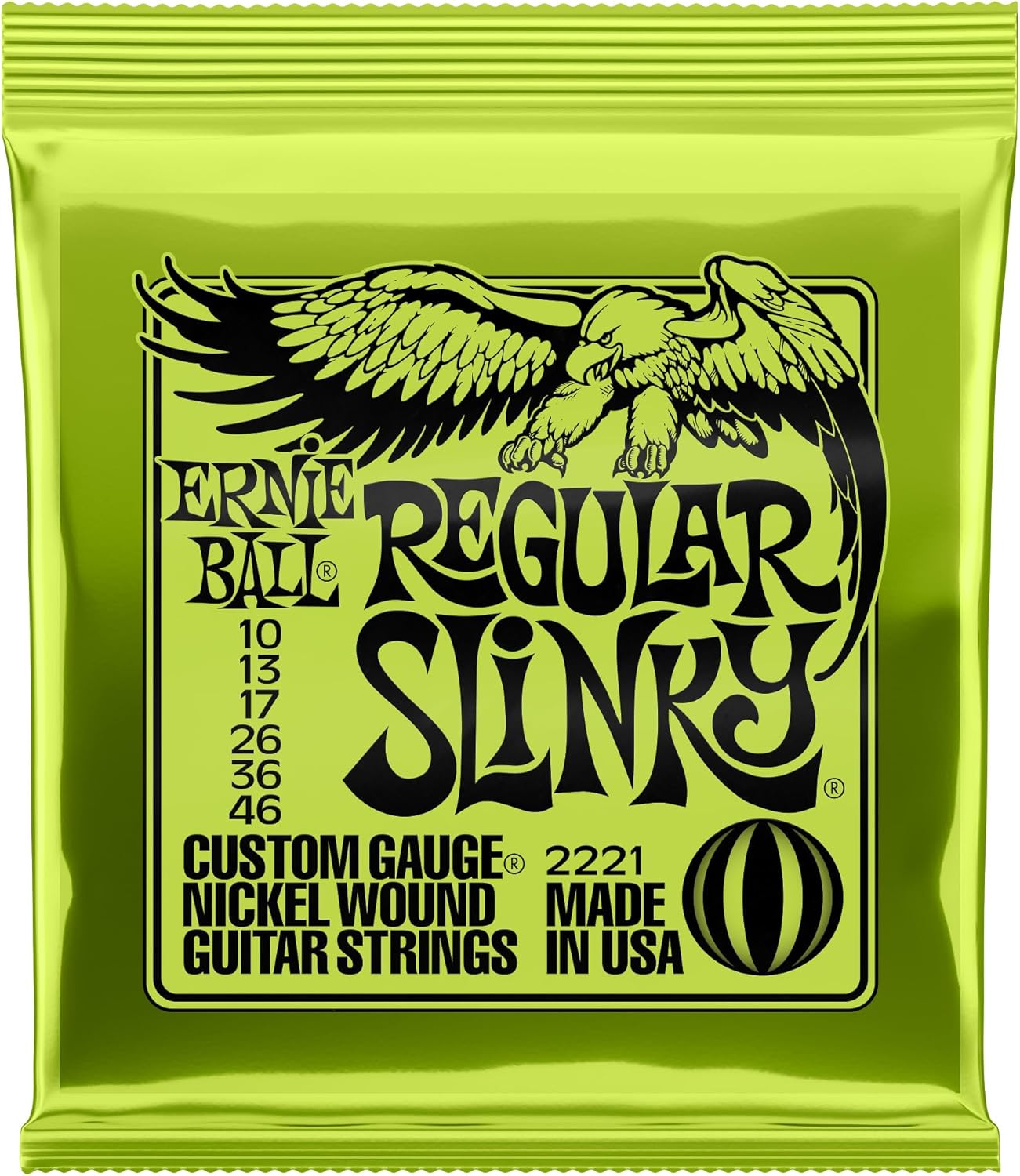
Ernie Ball Regular Slinky Nickel Wound Electric
A nickel wound electric set in 10-46 gauge, in Element Shield packaging that prolongs string life and keeps strings fresh.
- Material: Nickel Wound

Ernie Ball Super Slinky Nickel Wound Electric
A nickel wound electric set in 9-42 gauge, in Element Shield packaging that prolongs string life and keeps strings fresh.
- Material: Nickel Wound
These come from our ranked list Best Guitar Strings, which compares them spec by spec.
Frequently asked questions
Do coated strings really last longer?
A coating shields the wrap wire from sweat, corrosion, humidity, and rust, so a coated set is made for less frequent string changes. The Elixir set below uses a NANOWEB coating for that protection. An uncoated set still plays well; it simply shows wear sooner under the same playing.
How do I know my strings are dead?
They stop holding tune, sound dull, or feel rough under your fingers, and you may see discoloration or rust along the string. When those signs show up together, put on a fresh set.
Should I change all six strings at once?
Yes. A fresh set keeps the tone even across the strings, and a new string beside worn ones will sound out of place. Change the whole set, then check the tuning as the strings settle.
Does wiping strings down help them last?
Yes. A wipe with a soft dry cloth after playing lifts sweat and dirt from the wrap wire before it settles. It takes little time and keeps the strings cleaner between changes, so make it part of putting the guitar away.
Ranked guitar strings lists
More how-to guides
Product details come from each Amazon listing and can change. Check the listing before you buy.