Baritone Guitar String Gauge Explained
Updated Nov 12, 2026 · By  Jonah Mercer · Editorial policy
As an Amazon Associate I earn from qualifying purchases. Buying through the Amazon links on this page costs you nothing extra. Full disclosure
Baritone string gauge is the thickness of the strings, written as numbers such as 12-53. The opening number names the thinnest string and the closing number names the thickest, and baritone sets run heavier than standard sets, since a lower tuning on a longer scale needs thicker strings to hold tension. Match the gauge to your tuning.
What the numbers on a set mean
A string set is named by numbers such as 12-53, 10-46 or 9-42. The opening number names the thinnest string in the set and the closing number names the thickest, with the middle strings falling between them. Read the numbers as a range: a 12-53 set and a 10-46 set differ at each end, so compare the full set of numbers when you shop. The word Light on a pack names the gauge class, and the D'Addario and Elixir sets here carry the Light label at 12-53.
Why baritone sets run heavier
A baritone guitar tunes lower than a standard-scale guitar, and a lower tuning slackens a string of the same thickness. Heavier strings restore the pull the tuning needs, so baritone sets use thicker strings across the set. The change shows at the low end most of all: the thickest string carries the lowest notes, so it grows the most as the tuning drops. If a set feels loose or will not hold its pitch, the gauge is too light for the tuning, not the guitar.
Match the gauge to the tuning
Start from the tuning you plan to use, then pick a set built for it. A set made for standard tuning will sit slack on a baritone tuned low, and a set made for a low tuning will pull hard on a standard-scale guitar. Check the gauge printed on the pack and the tuning the maker lists for the set before you buy. When in doubt, ask a repair shop which gauge suits your guitar and tuning, since the neck and nut need to suit the strings.
Read the pack before you buy
The pack tells you the gauge, the material and the instrument the strings are made for, so read it before you buy. The D'Addario EJ16-3D pack holds phosphor bronze acoustic strings at 12-53 in a pack of 3 sets, while the Elixir set is a phosphor bronze acoustic set at 12-53 with a NANOWEB coating. The Ernie Ball Regular Slinky is a nickel wound electric set at 10-46, and the Super Slinky is a nickel wound electric set at 9-42. Match the instrument on the pack to your guitar: acoustic strings for an acoustic guitar, electric strings for an electric guitar.
When to change the strings
Change strings when they show wear, not by the calendar. Look for discolored or rough strings, rust on the wrap wire, and strings that no longer hold tune. Playing a lot, and playing where your hands sweat, wears strings faster, so check them and change them when the signs appear. Wipe the strings with a soft dry cloth after playing to keep sweat and dust off the wrap wire.
What you need

D'Addario EJ16-3D Phosphor Bronze Acoustic Guitar Strings
A phosphor bronze acoustic set at 12-53 Light gauge in a pack of 3 sets, with a hexagonal high-carbon steel core and a corrosion-resistant precision wound wrap.
- Sets in pack: 3
- Material: Phosphor Bronze

Elixir
A phosphor bronze acoustic set at 12-53 Light gauge with a NANOWEB coating, listed as protecting the strings from sweat, corrosion, humidity and rust.
- Coated strings
- Material: Phosphor Bronze
- Gauge: Light
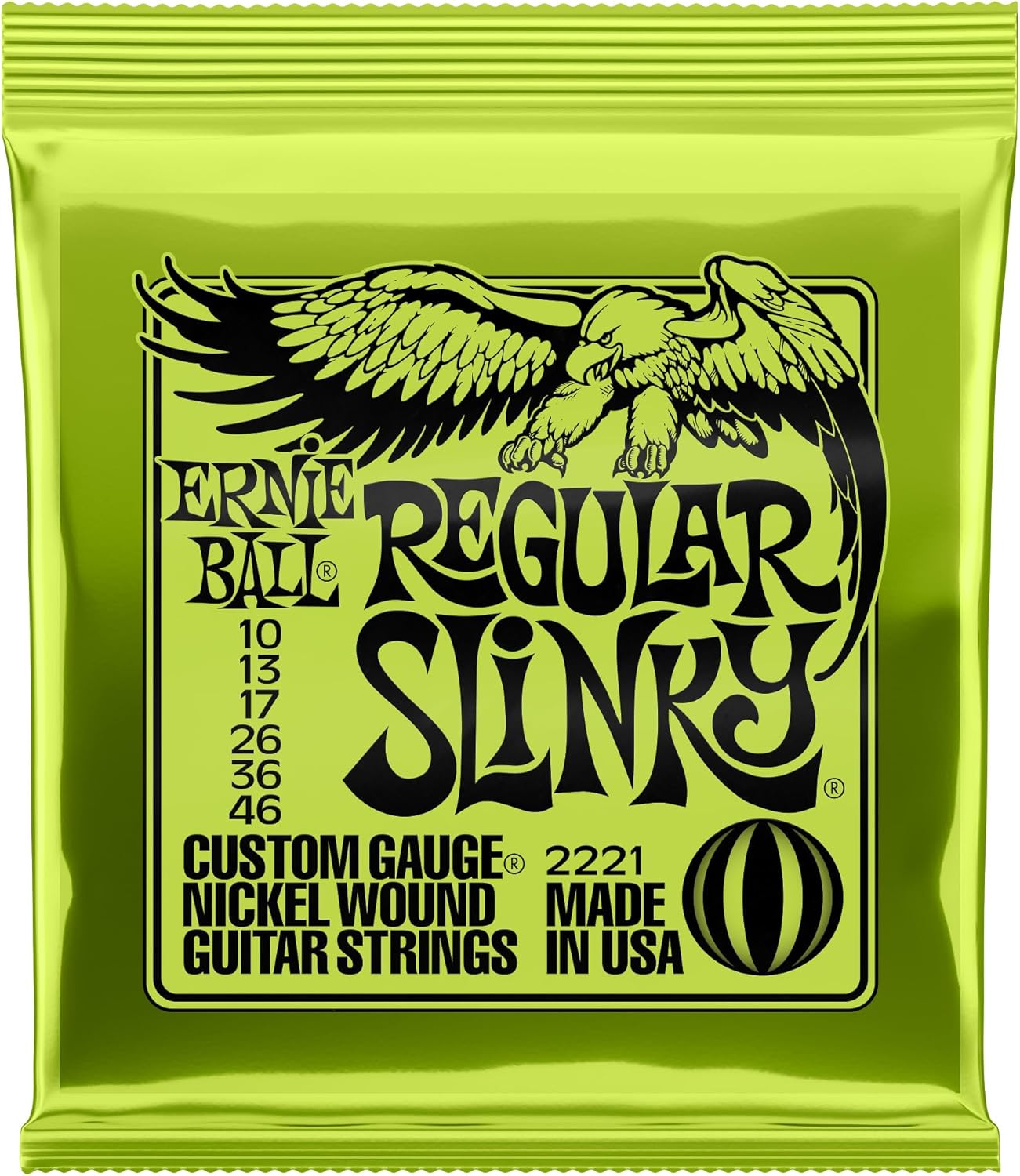
Ernie Ball Regular Slinky Nickel Wound Electric
A nickel wound electric set at 10-46 gauge, the Regular Slinky the maker calls the industry standard for electric guitar strings.
- Material: Nickel Wound

Ernie Ball Super Slinky Nickel Wound Electric
A nickel wound electric set at 9-42 gauge, one of the original Slinky gauges, with a bright, balanced tone.
- Material: Nickel Wound
These come from our ranked list Best Guitar Strings, which compares them spec by spec.
Frequently asked questions
What gauge strings come on a baritone guitar?
Baritone guitars ship with heavier sets than standard-scale guitars, and the right gauge depends on the tuning and scale length.
Can I put baritone strings on a standard guitar?
A set made for a low tuning will pull hard on a standard-scale guitar, and the nut slots may not fit the thicker strings. Check the tuning the maker lists for the set, and ask a repair shop before you fit a heavier set to a standard-scale guitar.
Do coated strings last longer than uncoated strings?
The Elixir set here uses a NANOWEB coating that the maker lists as protection against sweat, corrosion, humidity and rust. The D'Addario set is listed as a coated phosphor bronze set. Judge any set by the signs of wear, and change strings when they no longer hold tune.
What does 12-53 mean on a string pack?
It names the gauge range of the set: the opening number is the thinnest string and the closing number is the thickest. The Elixir set lists the full range as 12-16-24-32-42-53, so each string in the set has its own gauge.
Ranked guitar strings lists
More how-to guides
Product details come from each Amazon listing and can change. Check the listing before you buy.